
Deciphering hydroelectricity
Find out everything you need to know about hydroelectricity in France and why it is worth investing in hydroelectricity.
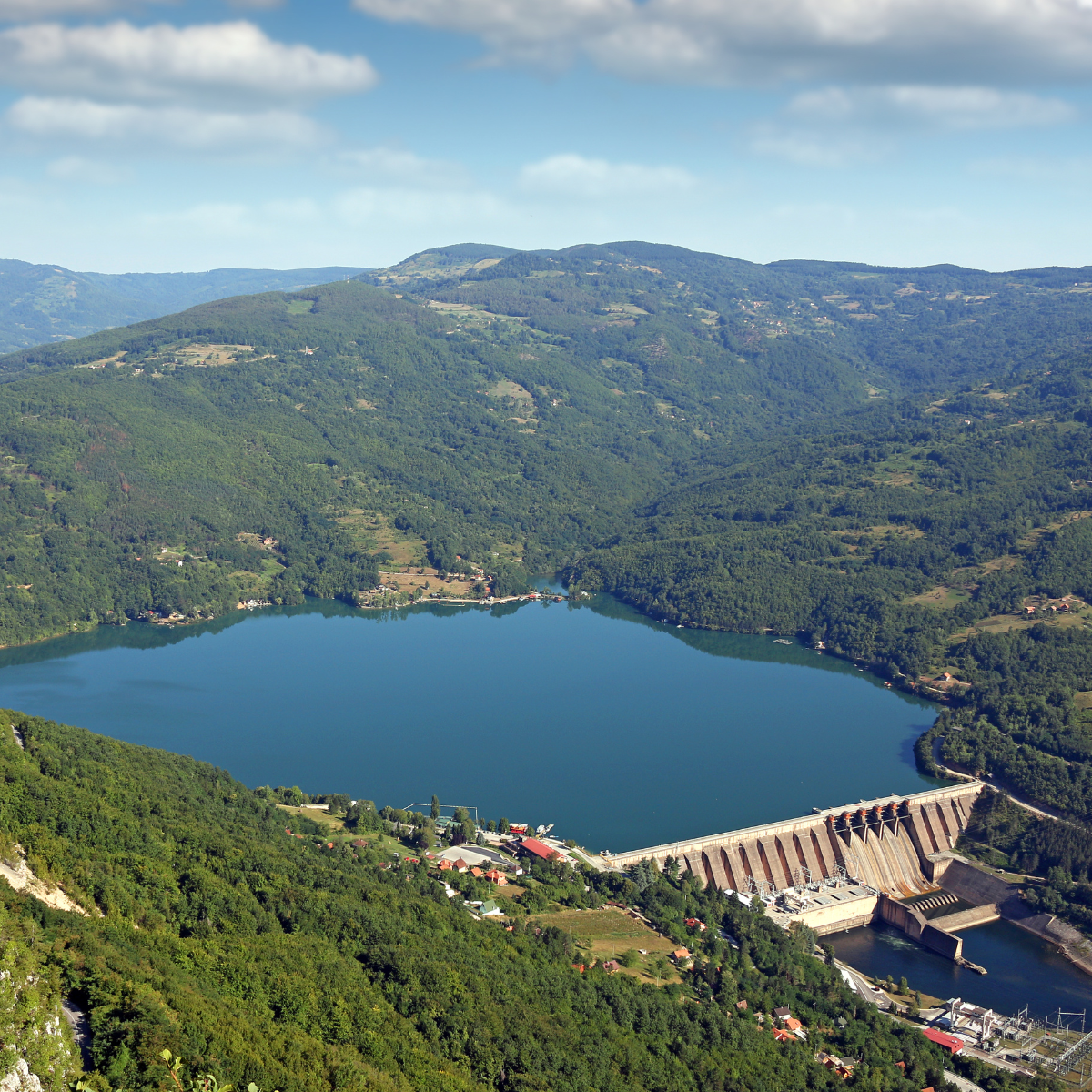
After photovoltaic and methanisation, Enerfip is looking at a new source of renewable energy with you: hydroelectricity. As the oldest renewable electricity resource in France (created at the end of the 19th century) and thanks to its status as the leading renewable electricity resource in France in 2024, it is a key element of the future energy mix. The hydroelectric park produces an average of 65 TWh of electricity per year. Want a comparison to see things more clearly? That's 3 times more than wind power and 8 times more than solar power.
Discover everything you need to know about hydroelectricity in France: how it works, key figures, the most developed regions in terms of hydroelectric parks, national objectives and why it is worth investing in hydroelectricity.
Key figures
In 2023, France will have:
💧 an installed capacity of 25,684 MW
💧 a hydroelectric production of 54.8 TWh
💧 a consumption coverage rate by hydroelectric production of 12.5%
What is hydroelectricity?
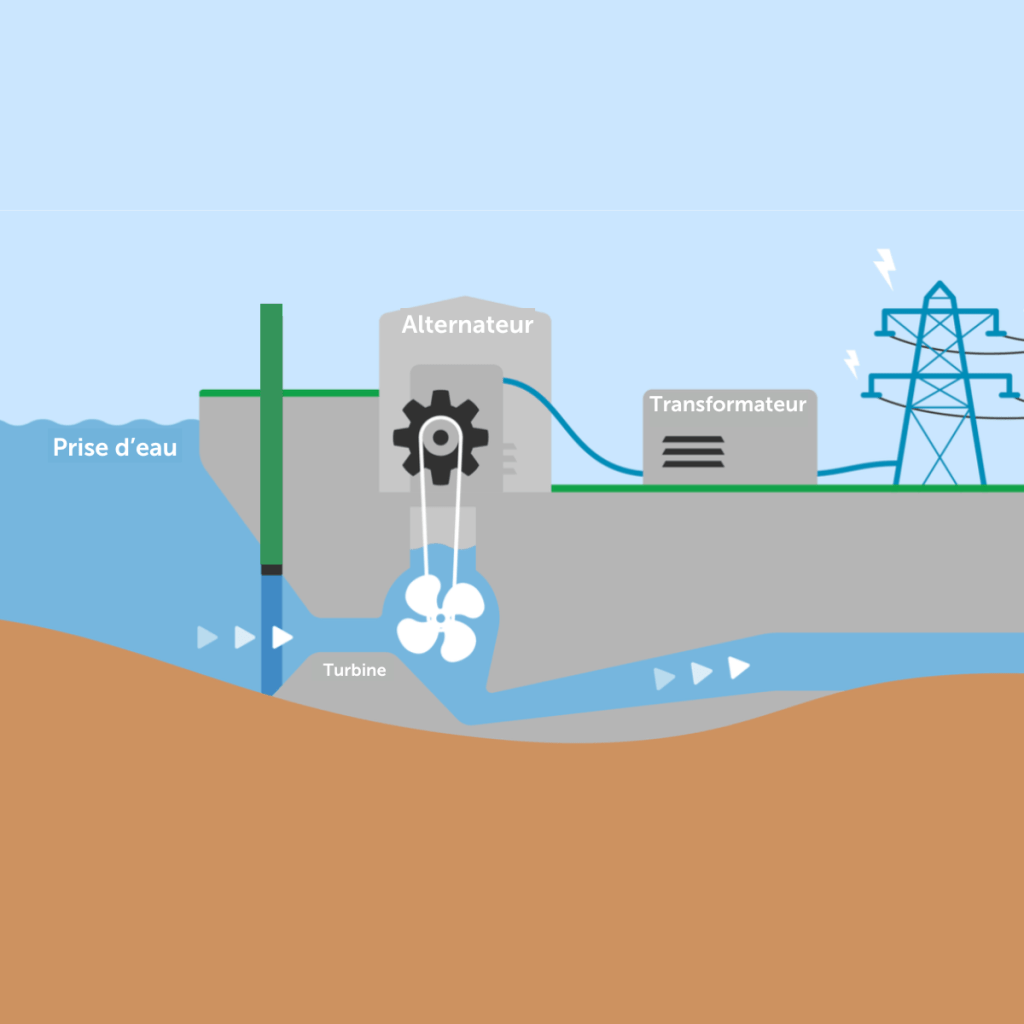
Hydroelectricity, also called hydroelectric power, consists of transforming the kinetic energy of the water current into mechanical energy using a turbine. It is then transformed into electrical energy via an alternator.
Did you know?
This technique, which produces electricity by rotating a magnet (rotor) around or near fixed copper wires (stator), is similar to the dynamo, used in bicycles in particular. And even more surprising, it's the same technique found in nuclear power plants!
You won't believe it! Let us explain: the heat released by the nuclear reaction produces steam that turns a turbine. QED!
So, how does a hydroelectric power plant work? As you've probably guessed, the driving force of the water allows it to produce electrical energy using the same system as a dynamo. However, be aware that there are different installations to adapt to the body of water on which it is located (torrent, dam lake, river, etc.).
- On the one hand, high- or medium-head power plants exploit a low water flow with a significant drop.
- On the other hand, low-head power plants are characterized by a water flow that can be significant under a smaller drop.
France's hydroelectricity objectives
What are the hydroelectric regions in France?
⚡ The Auvergne-Rhône-Alpes region, with 44% of the installed capacity in 2023, represents a production of 24,428 GWh in 2023.
⚡ The Occitanie region accounts for 21% of the installed capacity in France, or 5,346 MW, which is equivalent to a production of 8,095 GWh in 2023.
⚡ The Provence-Alpes Côte d’Azur region, with nearly 12% of the installed capacity in France, represents more than 20% of consumption coverage.
In France, as in the European Union, the PNIEC (National Integrated Energy and Climate Plan) summarizes and governs environmental and ecological ambitions for the coming years. So, what are the national objectives for hydroelectricity?
- France wants to increase its hydroelectric capacity from 900 to 1,200 MW by 2028. How? In particular, by optimizing the production of existing facilities. This should, in fact, allow for additional production of around 3 to 4 TWh.
- Furthermore, the French government also plans to install hydroelectric power plants on existing, unequipped dams and to renovate existing power plants. This would allow for the production of between 1 MW and 4.5 MW of additional power.
- Alongside these actions, the State wants to continue promoting small-scale hydroelectricity, at a rate of 35 MW per year.
🤔 Small-scale hydroelectricity, what is it?
These are low-power hydroelectric installations (less than 10 MW). In 2019, France already had more than 2,300 small hydroelectric installations, representing a cumulative power output of 2.2 GW!
- The latest development axis for hydroelectricity in France is based on the democratization of pumped storage hydroelectric power plants (PSPs). The French government aims to produce 1.5 GW when the installations are commissioned between 2030 and 2035.
Invest in hydroelectric energy with Enerfip!
Has this article convinced you to invest in hydroelectric energy? Then you've come to the right place! Enerfip, our crowdfunding platform dedicated to the energy transition, allows you to make low-carbon and profitable investments. Through our sustainable solution, you can support meaningful projects while increasing the value of your financial portfolio.


Our latest articles
.jpg)

.jpg)
.jpg)
Investor Relations
Please feel free to contact Enerfip's Investor Relations Department for assistance with your applications.


Lorem ipsum dolor sit amet, consectetur adipiscing elit. Suspendisse varius enim in eros elementum tristique. Duis cursus, mi quis viverra ornare, eros dolor interdum nulla, ut commodo diam libero vitae erat. Aenean faucibus nibh et justo cursus id rutrum lorem imperdiet. Nunc ut sem vitae risus tristique posuere.
Lorem ipsum dolor sit amet, consectetur adipiscing elit. Suspendisse varius enim in eros elementum tristique. Duis cursus, mi quis viverra ornare, eros dolor interdum nulla, ut commodo diam libero vitae erat. Aenean faucibus nibh et justo cursus id rutrum lorem imperdiet. Nunc ut sem vitae risus tristique posuere.